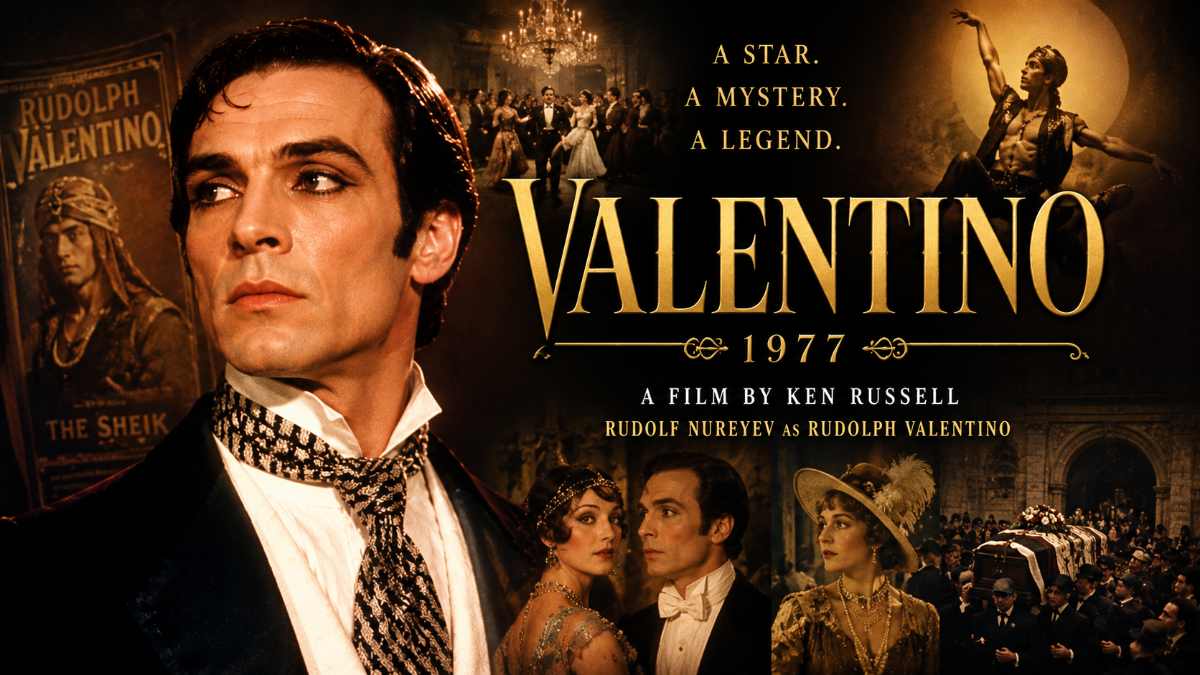
Valentino Movie 1977: The 1970s produced several ambitious Hollywood biopics, but few remain as visually daring and emotionally divisive as Valentino. Directed by Ken Russell, the film attempted to capture the mysterious rise and tragic downfall of silent-era icon Rudolph Valentino, one of cinema’s earliest global heartthrobs.
Released in 1977, the movie combined extravagant visuals, stylized storytelling, and controversial themes that immediately divided critics and audiences.
Even decades later, Valentino Movie 1977 continues to spark debate among classic film enthusiasts and cinephiles. Some praise it as a bold artistic experiment, while others consider it one of Ken Russell’s most excessive productions. Regardless of opinion, the film remains an unforgettable portrait of fame, identity, sexuality, and Hollywood mythology.
In this detailed review and analysis, we will explore the film’s story, cast, production history, performances, critical reception, themes, and its long-term legacy in cinema history.
Introduction to Valentino Movie 1977
Released in October 1977, Valentino is a biographical drama based loosely on the life of silent-film legend Rudolph Valentino. The movie stars internationally famous ballet dancer Rudolf Nureyev in the lead role, alongside Leslie Caron, Michelle Phillips, and Carol Kane.
Unlike traditional Hollywood biopics, Ken Russell approached the subject with heavy symbolism, dreamlike imagery, and exaggerated emotional drama. The result was a film that felt more like a fever dream than a standard historical narrative.
At the time of release, audiences expected a glamorous story about silent cinema’s greatest romantic star. Instead, Russell delivered a provocative meditation on celebrity culture, masculinity, and public obsession.
Read Also:- Chand Mera Dil (2026): Ananya Panday & Lakshya’s College Romance, Release Date, Cast, Story & Complete Guide
The Story Behind Rudolph Valentino
To understand the film, it is important to understand the real-life figure who inspired it.
Rudolph Valentino was one of the biggest stars of the silent-film era during the 1920s. Born in Italy, Valentino immigrated to America and eventually became famous through films such as The Sheik and Blood and Sand. His exotic screen presence and romantic image made him an international sensation.
However, Valentino’s fame also attracted intense media scrutiny. Rumors about his private life and sexuality followed him constantly. His sudden death in 1926 at only 31 years old caused mass hysteria among fans, turning him into a permanent Hollywood legend.
Ken Russell’s film focuses heavily on these emotional and psychological pressures rather than presenting a straightforward biography.
Plot Summary of Valentino Movie 1977
The movie begins with the death of Rudolph Valentino in 1926. From there, the story unfolds through flashbacks as different women in Valentino’s life remember him in contrasting ways.
The narrative traces Valentino’s journey from immigrant dancer to Hollywood superstar. Along the way, viewers witness his difficult relationships, growing fame, emotional isolation, and struggles against public rumors about his masculinity.
The film explores several important relationships in Valentino’s life, particularly with his second wife, Natasha Rambova. Michelle Phillips portrays Rambova as both supportive and emotionally complicated, reflecting the unstable nature of celebrity marriages during Hollywood’s early years.
Rather than focusing purely on historical accuracy, Russell transforms Valentino’s life into a theatrical exploration of obsession and fantasy. Many sequences feel surreal, with exaggerated costumes, dramatic dance scenes, and highly stylized sets.
Rudolf Nureyev’s Performance as Valentino
One of the biggest talking points surrounding the film was the casting of Rudolf Nureyev.
At the time, Nureyev was already a globally respected ballet dancer but had limited acting experience. Ken Russell believed Nureyev possessed the charisma and physical elegance necessary to portray Valentino’s seductive public image.
Nureyev’s performance received mixed reactions. Critics praised his physical presence and dance sequences but questioned his dramatic acting ability. Still, there is no denying that his screen presence gives the film a unique energy.
Unlike traditional actors, Nureyev approached scenes with movement and expression rooted in dance performance. This worked especially well during the film’s elaborate ballroom and fantasy sequences.
His portrayal also emphasized Valentino’s vulnerability beneath the glamorous exterior. Throughout the film, Nureyev presents Valentino as a man trapped by his own image, constantly pressured to satisfy Hollywood expectations.
Ken Russell’s Direction and Visual Style
Few directors in cinema history possessed a visual style as bold as Ken Russell.
Known for films filled with excess, symbolism, and operatic emotion, Russell transformed Valentino into a lavish visual spectacle. The movie features extravagant costume design, surreal dream sequences, theatrical staging, and emotionally intense imagery.
Rather than aiming for realism, Russell focused on emotional truth through visual exaggeration. This approach makes the film feel closer to an artistic fantasy than a conventional historical drama.
Some viewers admire this fearless creativity, while others find it overwhelming. Either way, the movie stands apart from most biographical films of its era.
The director also uses Hollywood itself as a symbolic backdrop. The film portrays the entertainment industry as glamorous but emotionally destructive, showing how fame can consume a person’s identity.
Supporting Cast and Performances
While Nureyev remains the center of attention, the supporting cast contributes significantly to the movie’s atmosphere.
Leslie Caron as Alla Nazimova
Leslie Caron delivers one of the film’s strongest performances as actress Alla Nazimova. Her portrayal adds sophistication and theatrical depth to several scenes.
Read Also:- Hai Jawani Toh Ishq Hona Hai (2026): Varun Dhawan’s Romantic Comedy Comeback with a Modern Twist on Love
Michelle Phillips as Natasha Rambova
Michelle Phillips brings emotional complexity to the role of Natasha Rambova. Her chemistry with Nureyev creates many of the film’s most dramatic moments.
Carol Kane’s Memorable Appearance
Carol Kane appears in a smaller but unforgettable role that perfectly matches the movie’s eccentric tone. Her presence adds unpredictability and emotional intensity.
Overall, the cast embraces Russell’s exaggerated storytelling style rather than resisting it. This commitment helps maintain the film’s surreal atmosphere.
Themes Explored in Valentino Movie 1977
Fame and Isolation
One of the film’s strongest themes is the emotional loneliness created by celebrity culture. Valentino becomes adored worldwide but increasingly disconnected from authentic human relationships.
Masculinity and Public Image
The film also explores how society defines masculinity. Valentino constantly faces rumors and criticism because he does not fit traditional expectations of male behavior.
Russell presents this pressure as deeply damaging, showing how public opinion can shape personal identity.
Hollywood as Fantasy
Another major theme is Hollywood’s ability to transform real people into fictional symbols. The film suggests that audiences often fall in love with illusions rather than actual human beings.
Read Also:- Mirzapur: The Film (2026) — Release Date Confirmed, Cast, Story, Theater Plans & Everything We Know
Cinematography and Production Design
Visually, Valentino Movie 1977 remains stunning even today.
The cinematography by Peter Suschitzky creates a dreamlike atmosphere throughout the film. Rich lighting, dramatic shadows, and lavish set designs give many scenes the appearance of moving paintings.
The costume design also deserves recognition. Every sequence reflects the glamour and extravagance of the silent-film era while maintaining Russell’s theatrical artistic vision.
The production recreated 1920s Hollywood with remarkable detail, blending historical aesthetics with surreal fantasy elements.
Critical Reception at the Time of Release
Upon release, the movie received highly mixed reviews from critics.
Some reviewers praised the film’s visual ambition and originality. Others criticized its historical inaccuracies, unconventional storytelling, and exaggerated style.
Many critics specifically debated Rudolf Nureyev’s acting performance. While some admired his charisma, others felt he lacked emotional range compared to experienced film actors.
Commercially, the film struggled at the box office. Even producer Irwin Winkler later described it negatively in his memoirs.
However, over time, the movie gained a cult following among fans of experimental cinema and Ken Russell’s work.
BAFTA Recognition and Awards
Despite its divisive reception, the film still earned several prestigious award nominations.
Valentino received BAFTA nominations for:
- Best Cinematography
- Best Costume Design
- Best Production Design
These nominations reflected widespread recognition of the film’s technical and artistic achievements.
Even critics who disliked the movie often admitted that its visual presentation was impressive.
Read Also:- Jaanam Terii Kasam (2026): Release Date, Cast, Story, Music & Complete Guide to the Saddest Love Story
Historical Accuracy vs Artistic Interpretation
One of the biggest debates surrounding Valentino Movie 1977 involves historical accuracy.
The film takes significant creative liberties with Rudolph Valentino’s life. Certain events are exaggerated, while others are entirely fictionalized. Russell intentionally prioritized emotional storytelling over documentary realism.
For some viewers, this artistic freedom makes the film more emotionally powerful. Others believe it distorts Valentino’s real legacy.
Understanding Russell’s filmmaking philosophy helps explain these choices. He was less interested in presenting factual biography and more interested in exploring celebrity mythology.
Why Valentino Movie 1977 Still Matters Today
Although the movie remains controversial, it continues to attract attention for several reasons.
A Unique Hollywood Biopic
Modern biographical films often follow predictable formulas. Valentino feels completely different because it embraces risk and artistic experimentation.
Exploration of Celebrity Culture
Many themes explored in the movie remain relevant today. Public obsession with celebrity identity, rumors, and media narratives continues to dominate entertainment culture.
A Fascinating Time Capsule
The film also serves as a fascinating reflection of 1970s cinema, when directors had greater freedom to experiment with unconventional storytelling styles.
Ken Russell’s Career and Valentino’s Place Within It
Ken Russell directed several controversial films throughout his career, including Tommy, The Devils, and Women in Love. Among his filmography, Valentino occupies a particularly unusual position.
Even Russell himself later admitted he regretted making the film instead of directing The Rose.
Yet many modern critics argue that Valentino deserves reevaluation. Its bold visual style and psychological themes now feel more appreciated in an era where audiences are increasingly interested in unconventional cinema.
For dedicated film enthusiasts, the movie represents pure auteur filmmaking — deeply personal, visually fearless, and completely unconcerned with mainstream expectations.
Quick Info About The Movie
| Movie Title | Valentino |
|---|---|
| Release Year | 1977 |
| Genre | Biographical Drama |
| Director | Ken Russell |
| Lead Actor | Rudolf Nureyev |
| Based On | The life of Rudolph Valentino |
| Running Time | 128 Minutes |
| Country | United Kingdom / United States |
| Language | English |
| OTT Platform | Prime Video |
| Production Style | Surreal & Theatrical Biography |
| Main Themes | Fame, Identity, Hollywood Culture |
| Notable Cast | Leslie Caron, Michelle Phillips, Carol Kane |
| Cinematography | Peter Suschitzky |
| Release Date | October 1977 |
| Box Office Reception | Mixed Commercial Performance |
| Critical Response | Divisive but Cult Following Over Time |
| Awards Recognition | BAFTA Nominations for Cinematography, Costume & Production Design |
Final Verdict on Valentino Movie 1977
Valentino is not an easy film to categorize. It is part biography, part fantasy, part Hollywood satire, and part psychological drama.
Viewers expecting a traditional historical movie may find it frustrating. However, those open to experimental filmmaking may discover an unforgettable cinematic experience.
Ken Russell transformed Rudolph Valentino’s life into a chaotic exploration of fame, desire, identity, and illusion. The film’s visual beauty, theatrical intensity, and emotional ambition make it one of the most unusual Hollywood biopics ever made.
Even nearly five decades after its release, Valentino Movie 1977 continues to provoke discussion — which may ultimately be the mark of truly memorable cinema.
Frequently Asked Questions
Is Valentino Movie 1977 based on a true story?
Yes, the film is loosely based on the life of silent-film star Rudolph Valentino, though many scenes are dramatized or fictionalized.
Who played Rudolph Valentino in the 1977 movie?
The role was played by ballet legend Rudolf Nureyev.
Who directed Valentino Movie 1977?
The film was directed by Ken Russell.
Was Valentino Movie 1977 successful?
The film received mixed reviews and struggled commercially, though it later developed a cult following.
Why is Valentino Movie 1977 considered controversial?
The movie became controversial because of its stylized storytelling, themes surrounding sexuality, and unconventional portrayal of Hollywood history.
Author Profile

-
Author Name: Raviendra Singh (UpcomingScreen)
Role: Movie Reviewer & Entertainment Writer
Focus: Telugu Cinema, Movie Reviews, OTT & Film Analysis
Raviendra Singh is a movie reviewer at UpcomingScreen, focusing on Telugu cinema, new releases, and audience-driven film reviews. His writing reflects a genuine viewer’s perspective, highlighting storytelling, performances, and overall entertainment value.
Latest entries
 Patient Rights & PrivacyAugust 19, 2026Patient Rights in Inpatient Mental Health Care: What You Keep When You Are Admitted
 Patient Rights & PrivacyAugust 8, 2026HIPAA and Mental Health Records: What Is Protected, Who Can See It, and How to Get Your File
 Workplace RightsAugust 8, 2026FMLA for Mental Health: Who Qualifies, What It Protects, and Where Leave Requests Fall Apart
 Denied Claims & AppealsAugust 8, 2026Prior Authorization for Mental Health Treatment: How It Really Works