Fantasy films from the 1970s carried a special kind of magic. Long before CGI-heavy adventures became common, filmmakers relied on imagination, storytelling, music, and emotional depth to create unforgettable cinematic experiences. Among those timeless classics stands The Little Prince (1974), a musical fantasy film that continues to inspire audiences decades after its release.
Based on Antoine de Saint-Exupéry’s beloved novella The Little Prince, the 1974 adaptation transformed the philosophical children’s story into a visually rich live-action musical filled with emotional themes, memorable performances, and imaginative storytelling.
Even today, The Little Prince Movie 1974 remains one of the most unique fantasy films ever made. It blends innocence with wisdom, creating a cinematic experience that speaks differently to viewers depending on their age and life experiences.
In this detailed review and analysis, we will explore the film’s release date, cast, story, production history, music, themes, critical reception, and lasting legacy.
Introduction to The Little Prince Movie 1974
The Little Prince was released on November 7, 1974, in the United States. Directed by Stanley Donen, the film adapted Antoine de Saint-Exupéry’s world-famous novella into a musical fantasy drama that combined live-action storytelling with emotional philosophical themes.
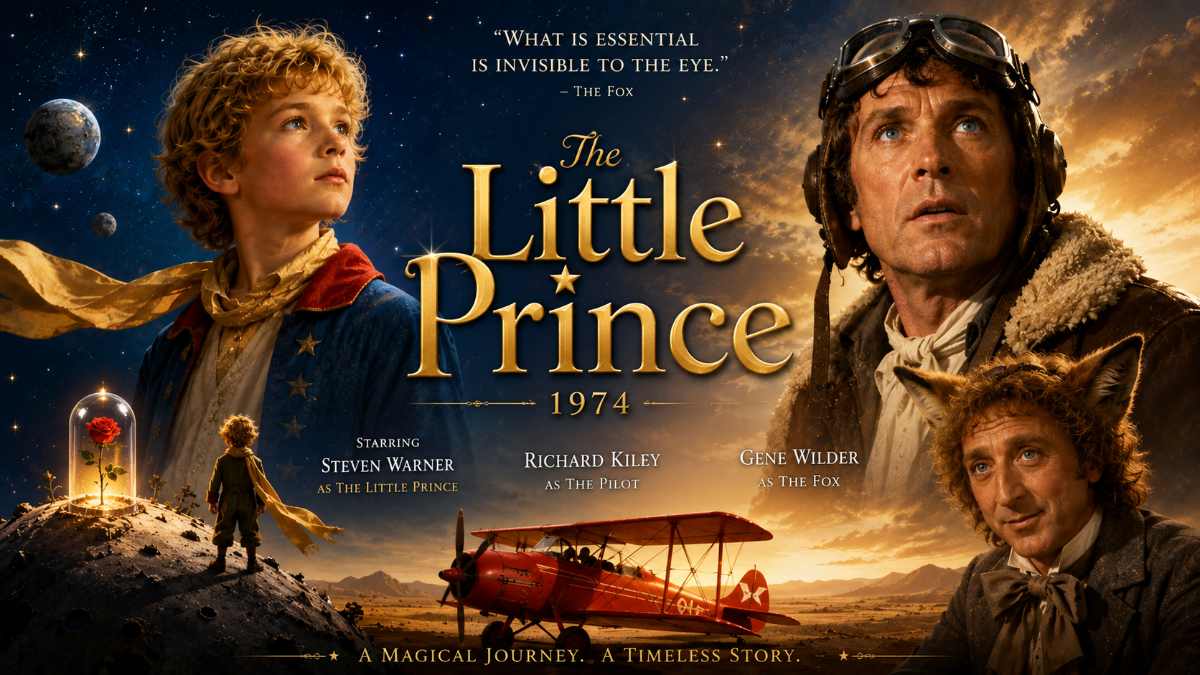
The movie starred Steven Warner as the Little Prince alongside legendary actor and dancer Gene Wilder as The Fox and Richard Kiley as The Pilot.
Unlike traditional family fantasy films, The Little Prince explored loneliness, friendship, imagination, love, and adulthood through poetic storytelling. The movie was designed to appeal not only to children but also to adults searching for emotional depth and meaning.
The film’s musical score and songs were created by the famous songwriting duo Alan Jay Lerner and Frederick Loewe, adding a magical Broadway-style atmosphere to the movie.
Read Also:- Valentino Movie 1977: A Deep Dive Into Ken Russell’s Controversial Classic
The Original Story Behind The Little Prince
Before discussing the film itself, it is important to understand the literary importance of The Little Prince.
The original novella was written by French writer and aviator Antoine de Saint-Exupéry during World War II and published in 1943. Over the decades, the book became one of the most translated and best-selling books in history.
Although often described as a children’s story, the novella contains deep philosophical reflections on life, relationships, innocence, greed, loneliness, and human behavior.
The 1974 movie attempted to preserve this emotional depth while adapting the story into a musical fantasy format suitable for cinema audiences.
Release Date and Production Details
The Little Prince Movie 1974 officially premiered on November 7, 1974. Produced by Paramount Pictures and distributed internationally, the film arrived during a period when fantasy musicals were still popular among family audiences.
Quick Movie Information
| Category | Details |
|---|---|
| Movie Title | The Little Prince |
| Release Year | 1974 |
| Release Date | November 7, 1974 |
| Genre | Fantasy Musical Drama |
| Director | Stanley Donen |
| Based On | The Little Prince by Antoine de Saint-Exupéry |
| Running Time | 88 Minutes |
| OTT Platform | Prime Video |
| Language | English |
| Production Company | Paramount Pictures |
| Music By | Frederick Loewe |
| Screenplay | Alan Jay Lerner |
The production focused heavily on practical sets, costumes, choreography, and real performances rather than relying on visual effects. This gives the movie a timeless handcrafted feeling that many modern fantasy films lack.
Read Also:- Running Point Season 2 (2026): Full Guide, Release Date, Cast, Storyline & Latest Updates
Story Summary of The Little Prince Movie 1974
The story begins in the middle of a vast desert, where a lonely pilot crashes his airplane after suffering mechanical failure. Stranded and desperate to repair his aircraft, he unexpectedly encounters a mysterious young boy known simply as the Little Prince.
The Little Prince claims to have come from another planet called Asteroid B-612. Through conversations with the pilot, he shares stories about his travels across different planets and the unusual adults he encountered along the way.
Each character the Little Prince meets symbolizes different flaws of adult society:
- A king obsessed with authority
- A vain man seeking admiration
- A businessman consumed by greed
- A geographer disconnected from real experience
These encounters reveal the film’s deeper message about how adults often lose imagination, innocence, and emotional understanding as they grow older.
One of the most emotional parts of the story involves the Little Prince’s relationship with a delicate rose on his home planet. The rose symbolizes love, responsibility, and emotional attachment.
During his journey on Earth, the Little Prince also meets a wise fox who teaches him one of the story’s most famous lessons:
“What is essential is invisible to the eye.”
This emotional philosophy forms the heart of the movie and remains one of the reasons audiences continue to connect with the story generations later.
Steven Warner’s Performance as the Little Prince
Casting the Little Prince was one of the film’s greatest challenges because the role required innocence, emotional sincerity, and natural charm.
Young actor Steven Warner ultimately delivered a memorable performance that became central to the movie’s emotional success.
Unlike many child actors of the era, Warner avoided exaggerated acting. His calm expressions, quiet curiosity, and emotional honesty made the character feel believable and sincere.
His performance captured both the wonder and sadness of the Little Prince, allowing audiences to emotionally connect with the story’s deeper themes.
Even decades later, many fans still consider Warner’s portrayal one of the best adaptations of the character ever brought to screen.
Gene Wilder’s Iconic Role as The Fox
One of the most unforgettable performances in the film comes from Gene Wilder as The Fox.
Although Wilder appears only briefly, his scenes carry enormous emotional weight. His gentle performance and emotional dialogue provide some of the movie’s most meaningful moments.
The Fox teaches the Little Prince about friendship, trust, emotional bonds, and responsibility. These scenes remain deeply moving because they speak to universal human emotions.
Gene Wilder’s warmth and sincerity elevated the role beyond simple fantasy storytelling, turning the Fox into one of the film’s most beloved characters.
Stanley Donen’s Direction and Visual Style
Director Stanley Donen was already famous for classic musicals like Singin’ in the Rain before working on The Little Prince.
His experience with choreography and visual storytelling helped shape the film’s dreamlike atmosphere.
Rather than focusing on realism, Donen embraced theatrical presentation, colorful costumes, minimalistic sets, and fantasy-inspired cinematography. The movie often feels like a stage play brought to life through cinematic techniques.
This artistic decision helped preserve the poetic simplicity of the original book while still creating visually engaging scenes for audiences.
The desert sequences, in particular, create a powerful feeling of loneliness and reflection that perfectly matches the story’s themes.
Read Also:- Absolute Value of Romance Season 1 (2026): Release Date, Cast, Story, Episodes & Complete Guide
Music and Songs in The Little Prince Movie 1974
Music plays a major role in the emotional atmosphere of the film.
The legendary songwriting team of Alan Jay Lerner and Frederick Loewe created the movie’s songs and score. Their work added elegance and emotional depth to the storytelling.
Some songs in the movie feel whimsical and playful, while others explore loneliness, imagination, and emotional connection.
The musical structure helps the film stand apart from other fantasy adaptations. Instead of relying on action sequences or spectacle, the movie uses music to express emotion and philosophical meaning.
Although the soundtrack did not become a massive commercial success at the time, many fans now appreciate it as an underrated part of 1970s musical cinema.
Themes Explored in The Little Prince Movie 1974
Innocence vs Adulthood
One of the film’s strongest themes is the contrast between childhood innocence and adult behavior.
The Little Prince views life with curiosity, emotional honesty, and imagination. Meanwhile, most adults in the story appear obsessed with power, money, status, or routine.
The movie suggests that growing older often causes people to lose emotional clarity and wonder.
Love and Responsibility
The Little Prince’s relationship with his rose teaches an important lesson about love and responsibility.
The story argues that genuine love requires care, patience, and emotional commitment rather than superficial admiration.
This theme gives the movie emotional depth beyond typical family fantasy films.
Loneliness and Human Connection
Many characters in the movie struggle with loneliness despite appearing successful or important.
The film repeatedly emphasizes that meaningful relationships matter more than achievements or material possessions.
This emotional message remains universally relatable even today.
Critical Reception Upon Release
When The Little Prince Movie 1974 was released, critics delivered mixed reviews.
Some praised the film’s emotional sincerity, visual beauty, and philosophical storytelling. Others felt the adaptation struggled to fully capture the emotional magic of the original novella.
Many reviewers specifically appreciated Gene Wilder’s performance and the film’s visual imagination.
Commercially, the movie performed modestly at the box office but never became a major mainstream blockbuster.
Over time, however, the film gained appreciation among fantasy lovers, musical fans, and readers of the original book.
Today, many viewers consider it an underrated adaptation that deserves more recognition.
Differences Between the Book and the Movie
Like most literary adaptations, the 1974 film makes several changes to the source material.
Musical Elements
The original novella was not a musical. The film added songs and dance sequences to create a broader cinematic experience.
Expanded Characters
Some characters receive additional screen time and dramatic presentation compared to the book.
Visual Interpretation
The movie uses theatrical visuals and fantasy aesthetics that differ from the minimalist illustrations in the novella.
Despite these differences, the film still preserves the emotional core and philosophical themes of the original story.
Why The Little Prince Movie 1974 Still Matters Today
Even after decades, the movie continues to resonate with audiences for several reasons.
Timeless Emotional Themes
The film explores universal human emotions such as love, loneliness, friendship, imagination, and loss.
These themes remain relevant regardless of generation.
A Unique Fantasy Experience
Modern fantasy movies often focus heavily on visual effects and action. The Little Prince takes a slower, more thoughtful approach centered on emotion and philosophy.
This makes the film feel refreshing even today.
Multi-Generational Appeal
Children may enjoy the fantasy adventure and colorful characters, while adults often connect more deeply with the movie’s emotional and philosophical layers.
Very few films successfully balance both perspectives.
Cinematography and Production Design
The film’s visual presentation deserves special recognition.
Its desert landscapes create a feeling of isolation and introspection, while the fantasy sequences bring surreal imagination to life.
The costume design also contributes heavily to the movie’s dreamlike atmosphere. Each character’s appearance reflects their symbolic personality and emotional meaning.
Rather than chasing realism, the production embraces fantasy storytelling with confidence.
This artistic approach gives the film a timeless quality that still feels visually charming today.
Read Also:- Lukkhe Season 1 (2026): Cast, Story, Release Details & Full Series Breakdow
Legacy of The Little Prince Movie 1974
Although it never achieved blockbuster status, the film slowly developed a loyal audience over the years.
Fans of classic fantasy cinema often praise the movie for its sincerity, emotional storytelling, and artistic ambition.
The film also helped introduce younger audiences to Antoine de Saint-Exupéry’s original novella, keeping the story alive for new generations.
Today, The Little Prince Movie 1974 remains an important part of fantasy film history and continues to inspire viewers searching for thoughtful, emotionally meaningful cinema.
Final Verdict
The Little Prince Movie 1974 is far more than a simple children’s fantasy film.
It is a poetic exploration of love, loneliness, innocence, imagination, and emotional connection wrapped inside a visually creative musical adventure.
While some viewers may prefer more modern adaptations, the 1974 version possesses a unique emotional warmth and artistic sincerity that remains difficult to replicate.
Stanley Donen’s direction, Steven Warner’s heartfelt performance, Gene Wilder’s unforgettable scenes, and the film’s philosophical storytelling combine to create a fantasy classic that continues touching hearts decades later.
For audiences willing to embrace slower, emotionally reflective storytelling, The Little Prince remains a beautiful cinematic experience worth revisiting.
Frequently Asked Questions
When was The Little Prince Movie 1974 released?
The film was released on November 7, 1974.
Who played the Little Prince in the movie?
Steven Warner portrayed the Little Prince.
Is The Little Prince 1974 based on a book?
Yes, the movie is based on Antoine de Saint-Exupéry’s famous novella The Little Prince.
Who directed The Little Prince Movie 1974?
The film was directed by Stanley Donen.
Is The Little Prince Movie 1974 suitable for children?
Yes, but many of its emotional and philosophical themes are especially meaningful for adult viewers as well.
Author Profile

-
Author Name: Raviendra Singh (UpcomingScreen)
Role: Movie Reviewer & Entertainment Writer
Focus: Telugu Cinema, Movie Reviews, OTT & Film Analysis
Raviendra Singh is a movie reviewer at UpcomingScreen, focusing on Telugu cinema, new releases, and audience-driven film reviews. His writing reflects a genuine viewer’s perspective, highlighting storytelling, performances, and overall entertainment value.
Latest entries
 Patient Rights & PrivacyAugust 19, 2026Patient Rights in Inpatient Mental Health Care: What You Keep When You Are Admitted
 Patient Rights & PrivacyAugust 8, 2026HIPAA and Mental Health Records: What Is Protected, Who Can See It, and How to Get Your File
 Workplace RightsAugust 8, 2026FMLA for Mental Health: Who Qualifies, What It Protects, and Where Leave Requests Fall Apart
 Denied Claims & AppealsAugust 8, 2026Prior Authorization for Mental Health Treatment: How It Really Works